
Explainer
What is IPTV and how does it work?
A plain-English explanation of internet television: how it is delivered, what you need to watch it, and how it differs from cable, satellite and streaming apps.
The short version
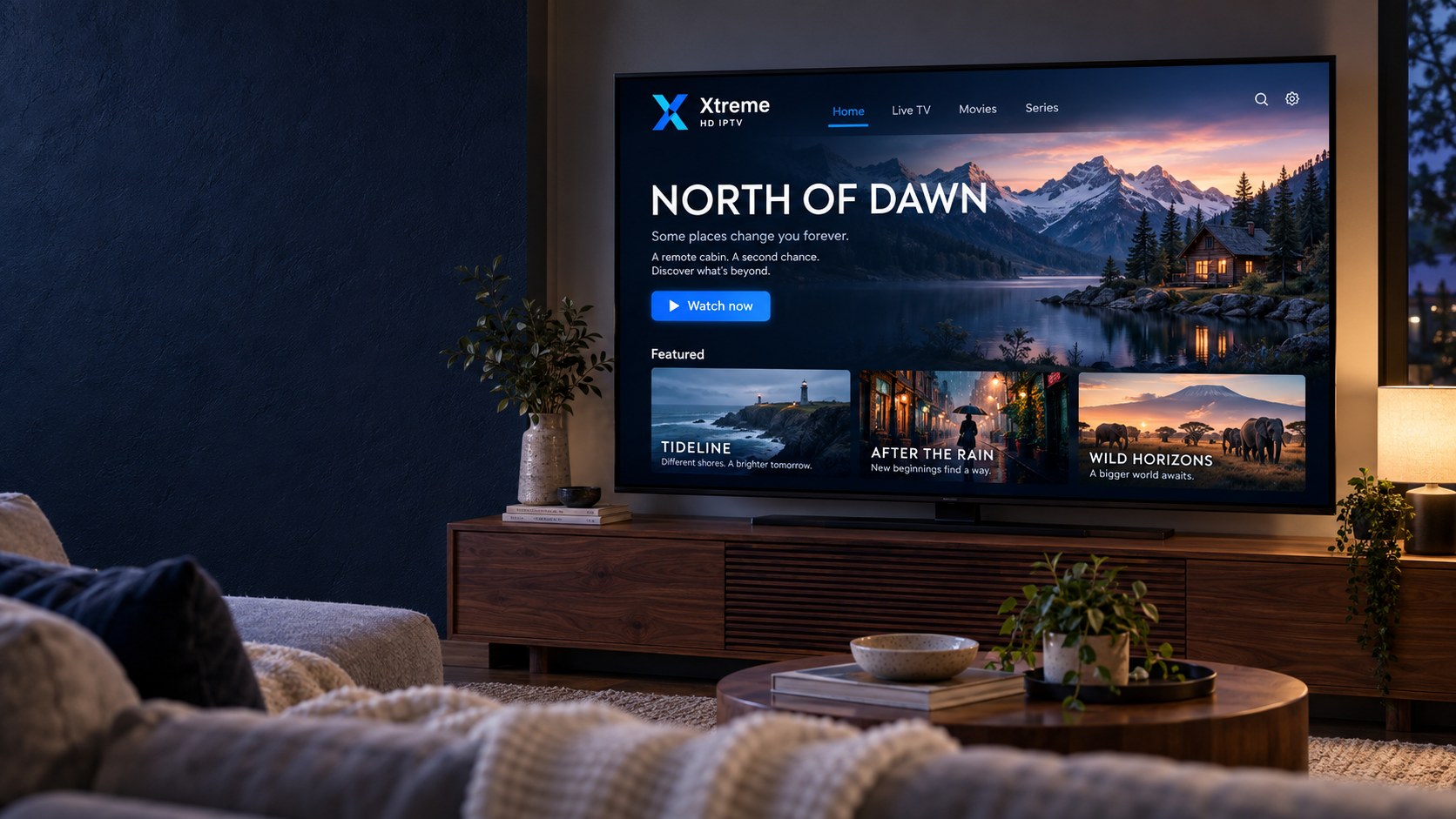
IPTV stands for Internet Protocol Television. It means television programming delivered over an internet connection rather than through an aerial, a satellite dish or a cable line. You watch it with a player app on a device connected to the internet, such as a smart TV, a streaming stick, a phone, a tablet or a computer.
How the pieces fit together
- The service. A provider makes live channels and, sometimes, on-demand libraries available on its servers, organised into categories.
- The subscription. You pay for access for a period of time and receive sign-in details: either an Xtream Codes login (server, username, password) or an M3U playlist link.
- The player app. A third-party app on your device reads those details, downloads the list of categories and plays the streams. Many players also show a programme guide.
- Your internet connection. Video is streamed in real time, so a stable connection matters more than a fast but erratic one.
How IPTV compares
| Aspect | IPTV | Cable / satellite | On-demand streaming apps |
|---|---|---|---|
| Delivery | Your broadband connection | Dedicated line or dish | Your broadband connection |
| Equipment | Any compatible device with a player app | Provider’s set-top box | The app on a supported device |
| Live channels | Yes, scheduled programming with a guide | Yes | Usually limited or none |
| Contract | Fixed-length subscription, renewed by choice | Often a long minimum term | Monthly, cancel any time |
| Portability | Works wherever you have internet and a device | Tied to the installation address | Portable within licensing rules |
What affects picture quality
Streams are available in a range of resolutions. What you see depends on the source content, the capability of your device, the player app and, above all, the stability of your internet connection. A wired Ethernet connection is the most reliable; strong 5 GHz Wi-Fi close to the router is the next best option.
A note on legality and licensing
IPTV is simply a delivery method; many broadcasters and telecoms companies use it. What matters is that the provider has the rights to distribute the programming it offers. If you have questions about what is included in a subscription and where it can be used, ask before you buy.
Next steps
Ready to explore Xtreme HD IPTV?
Browse the available subscription options or contact our team for help choosing a plan and setting up your device.